Notes from a Belfast Test
Dave Sihra (Substack - Dave Meets Ball)
It may have only been two and a bit days of cricket, but there was plenty to talk about from the recent Belfast test match between Ireland and New Zealand.
Andy McBrine’s test match?

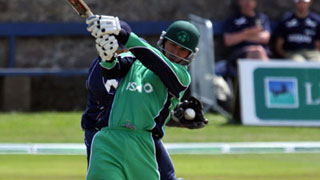
He took 1-99 at 4.5 per over, but scored 86 runs across two innings from his position in the lower order (7 and 8). Those numbers mightn’t generally turn heads but he was probably the most talked about Irish cricketer throughout the match. Scra’s test anyone?
McBrine’s 73 and partnership of 116 with Mark Adair in the first innings certainly saved Ireland from some embarrassment when the home side found themselves at 38 for 6. However it was more the way he did it that got people talking.
The Donemana man seemed very comfortable facing the moving ball, and certainly much better at combating such deliveries than maybe his colleagues in the Irish top order. And there’s also the consistency with which he’s done it.
Watch back the highlights or clips on the Cricket Ireland website and you will see why McBrine succeeded. He plays everything very late right underneath his eyes. Kevin O’Brien on TNT commentary specifically mentioned how close the left-hander plays to his body, never really playing with his hands away from where his head is.
However it’s also McBrine’s weight transfer. He commits enough forward or back depending on the information he’s picked up on each delivery. But he never over commits.
So he’s waiting and waiting and waiting to gather as much intel to safely negotiate each ball and in many cases score off of it should the opportunity present itself say if there’s width.
Now all batters are trying to do this just maybe with different methods and approaches, strengths/weaknesses etc. And it’s all easier said than done against Nathan Smith or Blair Tickner. But watching McBrine at Stormont reminded me of a segment Michael Atherton did once on Australian opener Chris Rogers for Sky Cricket.
Rogers (aged 35 at the time) playing in the 2013 Ashes was of course a veteran of the Australian game but had spent quite a bit of time trying to get into the Australian test side after making mountains of runs in the Sheffield Shield and the County Championship.
The crux of the piece was how Rogers went back and forward against the moving ball in English conditions. The left handed opener would only move as much as was needed to get his weight shifting in the right directions with his head completely balanced against Jimmy Anderson and Stuart Broad in their prime. And when Anderson could sharply swing the ball late in either direction with little change in action, stillness is life.

Atherton then compared this to the then young Steve Smith who’s movements were more pronounced shall we say. Smith also did alright in that series but didn’t yet show the clinical nature that would see the flamboyant batter even draw comparisons with Bradman.
Did a young Andy McBrine out in the North West idolise Chris Rogers who played for four different counties during a long County Championship career? Unlikely perhaps, but McBrine certainly looked the best equipped Irish batter to combat high level seam bowling. Which brings us to the inevitable question of whether the Donemana left-hander is currently being best utilitsed.
Ireland Men’s batting coach Gary Wilson acknowledged all of those talents of McBrine’s post-play on Day Two. Should he go go up the order? Wilson disagreed. The left hander has of course had all his success in the lower order.
It’s not red-ball cricket, but we have already seen McBrine up the order in ODI cricket with some success mostly against West Indies during that Covid ODI series win away. The infamous “pinch-blocker” as dubbed by Jarrod Kimber. The short ball did trouble him however during this 2021 experiment.
In a post-Day Two chat with Nathan Johns, Wilson seemed to acknowledge that McBrine has since worked on his play of the short ball. Do we dare try again? Common sense would say keep McBrine in his current Test batting spot to stay consistent but then is McBrine built like most cricketers?
And do we even really know the limits of what the 33-year-old could achieve in what remains of his test career. With not many options currently available on the depth chart, and possibly some tough World Test Championship assignments on the horizon it could be worth considering whether we’re best using McBrine with what time he has left.
Where now for Reuben Wilson
For many watchers of Irish cricket it was only a matter of time. Reuben Wilson has featured in three Under-19 World Cups. Two years ago, at 17 years of age, he was also selected as part of that Emerging Ireland group that played a home series against West Indies Academy alongside Liam McCarthy, Tom Mayes, Cade Carmichael and Stephen Doheny. Injury however ruled him out after just four overs in the opening game at Eglinton.
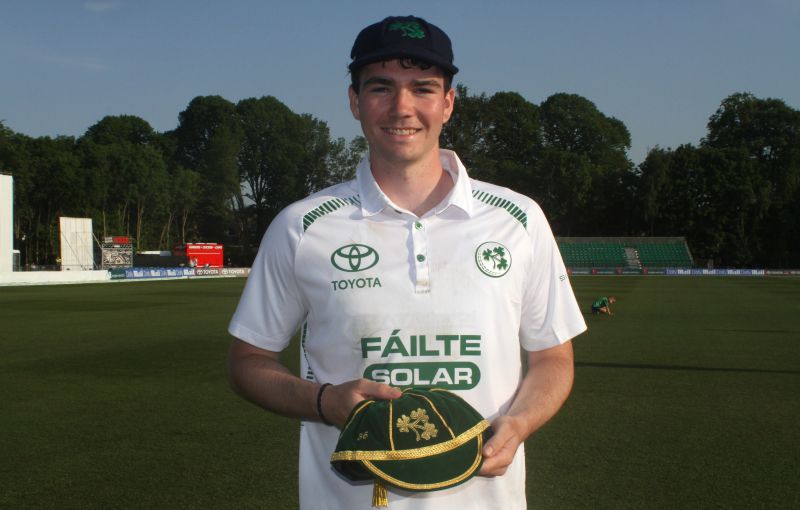
Back in 2023, the Clontarf seamer made his senior Inter-Provincial debut at just 16. So at 19, what’s next for Reuben Brian Wilson? He played his last Ireland Under-19s game at the World Cup in January, but he’ll feature for the Northern Knights this year having moved from the Leinster Lightning.
Hopefully there’s enough in the calendar to keep Wilson developing at the remarkable rate he already has. There could even be an international cap in white-ball cricket later in the summer given the injuries to Ireland’s seamers. Any takers for 19-year-old Reuben Wilson bowling to 15-year-old Vaibhav Sooryavanshi next month?
Final thoughts
For such a big occasion with a test match in Belfast against former WTC winners New Zealand and in such good weather maybe we didn’t quite get the fully sold-crowd we would have hoped for.
Admittedly Day One of the test match was mid-week. If it was on a Friday or Saturday who knows. But there was certainly no crowd hum akin to what you might some times experience at Lords for a test match. You were more likely to hear the occasional ambulance siren racing down the Newtownards Road.
During a few commentary stints on the Irish Cricket Podcast’s live radio coverage it was impossible not to reflect on memories of English test matches over the years. For many Irish cricket fans of a certain age growing up you’d be glued to Test Match Special, Channel 4, or maybe it was BBC’s television coverage before 1999.
Before there were Ireland teams in World Cups, before full member status and before the internet allowed you to follow just about any competition around the world, Irish cricket fans would have to consume English cricket (or support whoever they were playing) to get your cricket fix beyond what was on the island.
This year marks 20 years since English test cricket has gone behind a paywall. The iconic 2005 Ashes series, which was seen as a massive moment for the game in England, was broadcast free-to-air on Channel 4 with English test cricket then moving to Sky Sports in 2006.
There has recently been quite a bit of debate about whether this has harmed English cricket with potentially less fans being able to watch the game on satellite television or if the significant sums invested by Sky have benefited since first gaining the rights now over 20 years ago.
One point that hasn’t been considered is the impact on Irish cricket. Whether consciously or unconsciously, our island consumes a large quantity of English culture. Simply consider all the football at different levels.
With English cricket behind a paywall, has this had an added effect on Irish cricket fans? It will certainly have been a factor. The extent of it however mightn’t be easy to quantify.
Irish test matches will always have the ability to get people talking, get politicians down for a photo, and even offer extra work for those in the media tent.
From the perspective of players looking to improve, hungry journalists, ambitious politicians, and growing a red-ball audience on this side of the Irish Sea; let’s hope there’s much more test and first class cricket added to the calendar.
This article was originally published on the Substack: Dave Meets Ball